
Circuits
Autodromo di Pergusa – Enna Lake Circuit Guide
Originally published January 2017. Last updated September 2026: expanded Tier B circuit guide, facts table, table of contents, internal links, FAQ schema, and editorial refresh while preserving legacy narrative and images.
Autodromo di Pergusa (Enna-Pergusa) is a permanent race track on Sicily built around Lake Pergusa near the town of Enna. Opened in 1951 on lakeside access roads, it hosted non-championship Formula One Mediterranean Grands Prix, decades of Formula Two and Formula 3000, World Sportscar rounds, and FIA GT before safety limits pushed it toward national events.
The circuit matters because it combines high average speeds with water on both sides of the asphalt — cars have ended up in the lake, and a 1996 Formula 3000 race was delayed when thousands of frogs crossed the track. For Italian contrast read Monza, Mugello, or Vallelunga.
Contents
- Autodromo di Pergusa facts
- 1951 opening around Lake Pergusa
- Mediterranean Grand Prix and Formula One
- Formula 2 and Formula 3000 eras
- World Sportscar Championship and Coppa Florio
- 1996 frog invasion
- Touring cars, FIA GT, and licence battles
- FIA Grade 3 return and recent calendar
- Getting to Enna-Pergusa
- Frequently asked questions
Autodromo di Pergusa facts
| Location | Pergusa / Enna, Sicily, Italy (central Sicily) |
|---|---|
| Also known as | Enna-Pergusa; Autodromo di Pergusa |
| Circuit type | Permanent lakeside road course |
| Opened | 1951 |
| Length | 4.950 km (current layout with chicanes; originally 4.8 km) |
| Character | High-speed oval-like loop with limited runoff beside Lake Pergusa |
| Historic headline | Mediterranean Grand Prix (F1 non-championship); European F2; F3000; World Sportscar; FIA GT |
| FIA grade | Grade 3 (re-homologated 2009 after 2004 licence loss) |
| Notable hazard | Lake proximity — several cars have entered the water; protected nature reserve limits expansion |
Lap record note: F2, F3000, GT, and touring-car specifications differ widely. Compare lap times only within the same series year and chicane configuration.

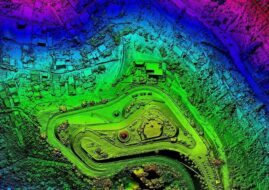
The race track at Lake Pergusa opened in 1951
High-speed loop around Lake Pergusa
The municipality built the circuit in 1951 using roads around natural Lake Pergusa. The original 4.8 km layout resembled a high-speed oval with a single chicane; pit garages sat directly on the shore. Because runoff was minimal, drivers occasionally left the track and entered the water.
Mediterranean Grand Prix and Formula One visitors
The inaugural Mediterranean Grand Prix in August 1962 was a non-championship Formula One race. Ferrari filled the front row; Lorenzo Bandini and Giancarlo Baghetti finished first and second.
John Surtees won in a Ferrari 156 in 1963. Jo Siffert took back-to-back wins in 1964 and 1965 in a BRM-powered Brabham BT11. The 1964 race is remembered for Mike Hailwood’s accident that sent his Lotus into the lake.

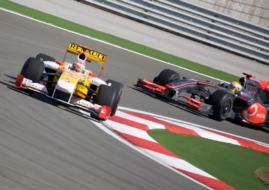
Formula 2 at Autodromo di Pergusa
Formula 2 from 1967 and Formula 3000 until 1998
There was no Mediterranean GP in 1966; from 1967 the event ran to Formula 2 rules as part of the European Championship until 1984, then switched to Formula 3000 through 1998.
Winners across those decades included future world champions and grand prix regulars — among them Jackie Stewart, Jochen Rindt, Jacques Laffite, Keke Rosberg, David Coulthard, Gil de Ferran, and Juan Pablo Montoya. Thierry Boutsen is the only driver with two F2 Mediterranean GP wins.
Rising speeds forced 1970s reconstructions with extra chicanes, extending the lap to 4.950 km and moving pits to the northern end.

Paddock facilities sit directly on the lake
World Sportscar Championship and Coppa Florio
The World Sportscar Championship visited from 1975, adding Pergusa to Monza and Mugello on Italy’s sportscar map. Coppa Florio winners included Arturo Merzario and Jochen Mass in Alfa Romeo and Porsche machinery.
In 1979, Lella Lombardi and Enrico Grimaldi won in a BMW Osella — Lombardi became the first woman to win an FIA world championship race. The WSC last visited in 1981.
1996 frog invasion
Because the pit lane sits close to the water, wildlife incidents are part of Pergusa folklore. During a 1996 Formula 3000 race, thousands of frogs left the lake and covered the circuit and pit lane, delaying the session while marshals cleared the track.

FIA GT Championship at Enna-Pergusa
Chicanes, ETCC, and FIA GT
A Pineta chicane before Curvone arrived in 1995. Because the circuit lies in a protected reserve, major widening was impossible; after Formula 3000 left in 1998, Pergusa lost top single-seater status.
The European Touring Car Championship returned in the 2000s — Fabrizio Giovanardi won four ETCC races at Pergusa. The FIA GT Championship visited in 2002 and 2003. Gabriele Tarquini and Roberto Colciago were among touring-car winners of that era.

Superstars Series at Lake Pergusa
Licence loss, Grade 3 return, and European Touring Car Cup
The FIA revoked Pergusa’s licence in 2004; partial 2005 work was insufficient, and the track hosted historics and non-racing events until 2009, when modifications earned FIA Grade 3 homologation again.
Superstars Series returned internationally in 2012. The FIA European Touring Car Cup ran from 2013 to 2015 — the last major international fixture in the legacy article timeline. National championships and track days continue on the 4.950 km layout.

Map of the 4,950-metre Autodromo di Pergusa layout
Getting to Autodromo di Pergusa
Enna-Pergusa sits in central Sicily between Palermo and Catania. Fly to Catania–Fontanarossa or Palermo, then drive inland to Enna (about 90 minutes from Catania). The autodromo is managed by the municipal consortium; check autodromopergusa.gov.it for national race calendars and access rules.
Frequently asked questions about Autodromo di Pergusa
Where is Autodromo di Pergusa?
Autodromo di Pergusa (Enna-Pergusa) is in central Sicily, beside Lake Pergusa near the town of Enna. The address is Piazza Garibaldi 8, Via Nazionale, 94010 Pergusa.
When did Autodromo di Pergusa open?
The circuit opened in 1951 on municipal roads around Lake Pergusa. The original high-speed layout measured about 4.8 km.
How long is the Pergusa race track?
The current homologated layout is 4.950 km after chicanes were added from the 1970s onward to control average speeds.
Did Formula One race at Pergusa?
Non-championship Formula One Mediterranean Grands Prix were held from 1962, including wins for Ferrari drivers and John Surtees. It was never a world championship Grand Prix.
What is the Mediterranean Grand Prix?
The Mediterranean Grand Prix at Enna-Pergusa began as a non-championship F1 race, then became a headline Formula 2 and later Formula 3000 event until 1998.
Why is Pergusa famous for frogs?
During a 1996 Formula 3000 meeting, thousands of frogs left Lake Pergusa and covered the pit lane and track, delaying the race while officials cleared the circuit.
Have cars gone into the lake at Pergusa?
Yes. The pit and track sit close to Lake Pergusa with limited runoff. Mike Hailwood’s Lotus entered the water in 1964; other incidents have occurred over the decades.
What happened to Pergusa’s FIA licence in 2004?
The FIA revoked the licence in 2004 for failing safety standards. After further work, the circuit regained FIA Grade 3 homologation in 2009.
What races use Pergusa today?
After the FIA European Touring Car Cup left following the 2015 season, the calendar is mainly Italian national series, historics, and track days. Check the official site for current events.
How does Pergusa compare with Monza or Mugello?
Monza and Mugello host modern Formula One and MotoGP. Pergusa is a shorter lakeside circuit with a Mediterranean GP heritage but tighter safety and environmental constraints.
Related reading
- Monza Circuit — Italian Grand Prix guide
- Mugello Circuit — Tuscan track guide
- Vallelunga — Rome testing circuit
- Imola Circuit — San Marino Grand Prix history
- Circuito del Jarama — Mediterranean climate contrast
Address: Autodromo di Pergusa, Piazza Garibaldi 8, Via Nazionale, 94010 Pergusa, Enna, Italy
Phone: +39 0935 543 1111
Official website: autodromopergusa.gov.it