

Top 10 Group B Rally Drivers

The Group B rally cars era that lasted between 1982 and 1986 is considered a golden period in world rallying history, although the project was stopped because it was too dangerous and resulted in fatal casualties. The Group B rally cars reached the peak in terms of engine power and remained the most powerful cars ever to compete in rally, as some cars had almost 600 hp.
To drive such monsters, rally drivers had to be extraordinary masters of their craft. Some of them achieved their career-best results in this period. Decades after Group B cars were banned from the World Rally Championship, they still define what “extreme” means in rallying. This list ranks the drivers who left the deepest mark on that short, violent era.
Group B Rally Drivers That Marked The History
Timo Salonen
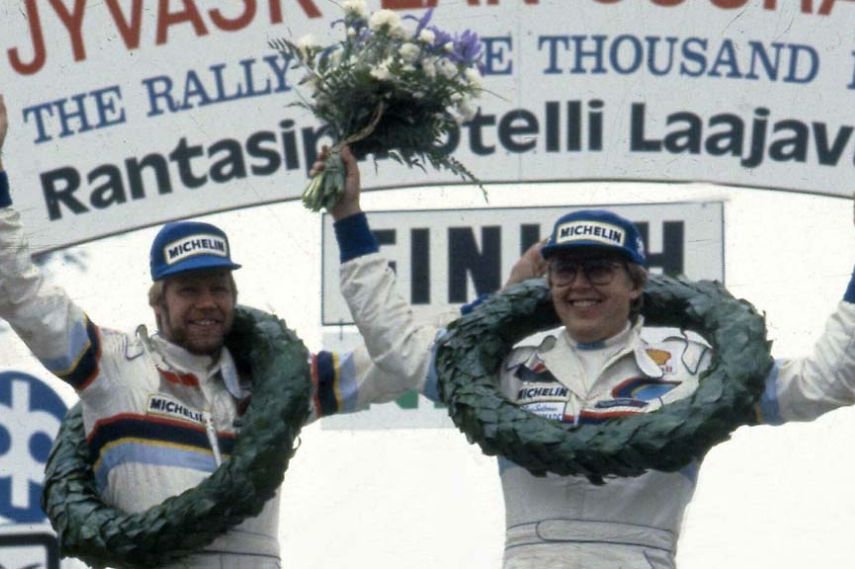
Seppo Harjanne and Timo Salonen in 1985
Timo Salonen sits at number one for a simple reason: he holds the Group B-era record for most WRC wins, with seven victories, and he became the 1985 world champion.
In the first years of Group B he drove for Team Nissan Europe in the Nissan 240 RS and was rarely a title threat. That changed in 1985 when he moved into the Peugeot 205 T16 and dominated the championship with five wins. He was the first driver to win four rallies in a row — Greece, New Zealand, Argentina and Finland — after also winning Rally Portugal in March.
| Early Group B | Team Nissan Europe — Nissan 240 RS |
|---|---|
| 1985 | Peugeot — 205 T16 · world champion · five wins |
| 1986 | Peugeot — 205 T16 · wins in Finland and GB · third in the championship |
In 1986 he added victories at the 1000 Lakes Rally and the Lombard RAC Rally, helping Peugeot to a second manufacturers’ title. On this list he represents the pure results case: when the car finally matched his talent, nobody in Group B won more often.
Stig Blomqvist
After years in Saabs, Stig Blomqvist joined Audi in 1982 and became one of the defining Quattro drivers of the Group B years — and the 1984 world champion.
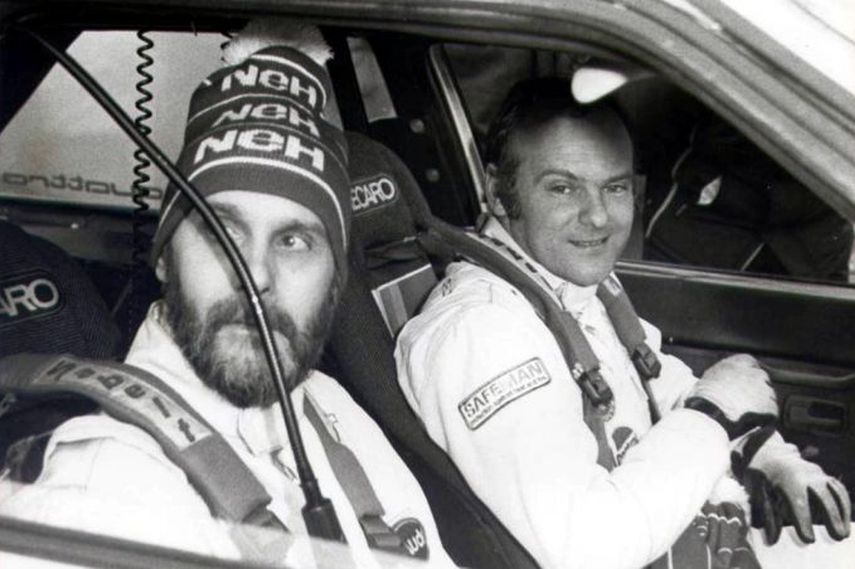
Bjorn Cederberg and Stig Blomqvist
The first Audi Quattro had begun life as a Group 4 car before the new rules converted it into the machine that dominated early Group B. Blomqvist helped Audi to the manufacturers’ title in 1982, won the RAC Rally in 1983, then took five wins in 1984 — the last of them in the shortened Audi Sport Quattro.
| 1982–83 | Audi Sport — Quattro / Quattro A2 · manufacturers’ title support; RAC win in 1983 |
|---|---|
| 1984 | Audi Sport — Quattro / Sport Quattro · world champion · five wins |
| 1985–86 | Audi Sport Quattro · then Ford RS200 and Peugeot 205 T16 · further podiums |
In 1985 he still scored three podiums in Audi’s most brutal cars. By 1986 he was sampling Ford and Peugeot machinery as the category unravelled. His place here is the Quattro story at full stretch: titles, five-win seasons, and the Sport Quattro at its most extreme.
Juha Kankkunen
Juha Kankkunen — later a four-time world rally champion — took his first title in the final Group B season, winning the 1986 drivers’ championship in a Peugeot 205 T16.
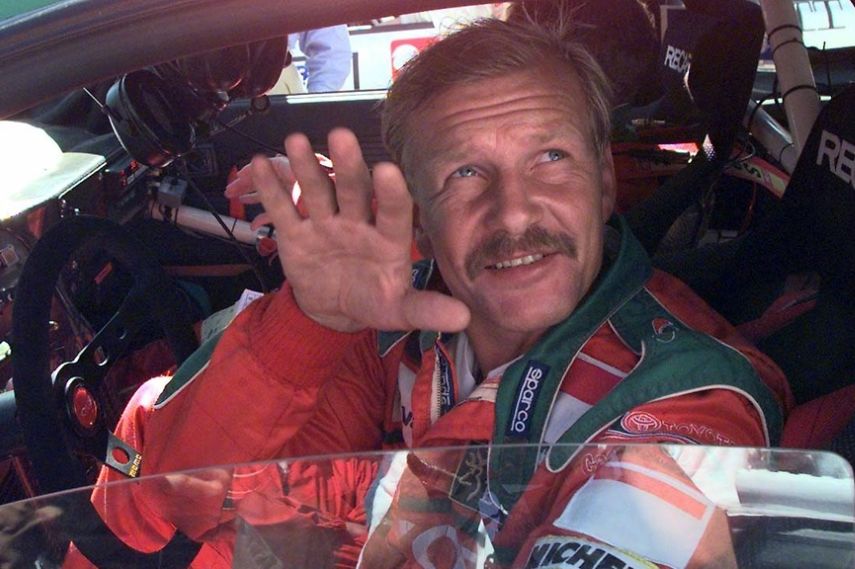
Juha Kankkunen
In that championship year he won three rallies and scored three more podiums, finishing ahead of Lancia’s Markku Alén and securing Peugeot’s second consecutive manufacturers’ title. Before Peugeot he had spent three seasons in the Toyota Celica TCT, winning the 1985 Safari Rally and Rallye Côte d’Ivoire.
| 1983–85 | Toyota — Celica TCT · Safari and Côte d’Ivoire wins in 1985 |
|---|---|
| 1986 | Peugeot — 205 T16 · world champion · three wins |
Kankkunen closes the Group B chapter as its last champion — proof that the era still produced a clean title fight even as the regulations were already doomed.
Hannu Mikkola
Hannu Mikkola was one of Audi’s two Group B-era world champions. From 1981 to 1987 he stayed with Audi Sport long enough to drive every major Quattro reincarnation.

Arne Hertz and Hannu Mikkola
His peak was 1983: world champion with four wins and three podiums. In 1984 he won in Portugal, scored six podiums and finished second behind teammate Stig Blomqvist while Audi again took the manufacturers’ title. Later WRC wins dried up, but he still collected international victories in Audi Group B cars at events such as the Olympus Rally, Hong Kong–Beijing and the International Welsh Rally.
| 1983 | Audi Sport — Quattro · world champion · four wins |
|---|---|
| 1984 | Audi Sport — Quattro · second in the championship · Portugal win |
| 1985–86 | Audi Sport — further Quattro variants · international wins outside the WRC core |
On this list Mikkola is the long Audi continuity story: present at the birth of the Quattro programme and still competitive as Group B reached its limit.
Walter Röhrl
Walter Röhrl won his second WRC title in 1982 in a Group 4 Opel Ascona 400 — the birth year of Group B, and the last time a rear-wheel-drive car won the drivers’ championship.

Walter Röhrl
In 1983 he joined Martini Lancia in the Lancia Rally 037, helping Lancia to the manufacturers’ title with three wins and three podiums, finishing second in the drivers’ points. He then moved to Audi: Monte-Carlo winner in 1984 in a Quattro A2, Sanremo winner in 1985 in the Sport Quattro, and a final Group B outing at Monte-Carlo in 1986 before Audi withdrew after Rally Portugal.
| 1982 | Opel — Ascona 400 · world champion (RWD) |
|---|---|
| 1983 | Martini Lancia — Rally 037 · manufacturers’ title · three wins |
| 1984–86 | Audi Sport — Quattro A2 / Sport Quattro · Monte-Carlo and Sanremo wins |
Röhrl’s Group B résumé spans Opel, Lancia and Audi — and the rare feat of winning a title just as the 4WD age began, then mastering the cars that made that age famous.
Ari Vatanen
Ari Vatanen, the 1981 world rally champion, was Peugeot’s early Group B spearhead — until a huge accident in Argentina cut his 1985 title challenge short.

Ari Vatanen at 1985 Rallye Monte-Carlo
In 1983, with Rothmans Opel, he won the Safari Rally in an Ascona 400 against the Audi Quattros. He joined Peugeot Talbot Sport for 1984; once the 205 T16 arrived he won in Finland, Italy and Great Britain. In early 1985 he added Monte-Carlo and Sweden before the Argentina crash. Teammate Timo Salonen took the title. Vatanen needed around 18 months to recover and returned in 1987 when the 205 T16 had been converted for the Dakar Rally.
| 1983 | Rothmans Opel — Ascona / Manta 400 · Safari win |
|---|---|
| 1984 | Peugeot — 205 T16 · wins in Finland, Italy and GB |
| 1985 | Peugeot — 205 T16 · Monte-Carlo and Sweden wins · season ended by Argentina crash |
His Group B chapter is unfinished business: title form, then injury, then a second life in the desert with the same Peugeot bloodline.
Markku Alén
Markku Alén spent the entire Group B era in Lancia’s factory team — first with the Rally 037, then the Delta S4 — and finished as runner-up in the final Group B championship.

Markku Alén
In 1983 he won the Tour de Corse in the 037 and finished third in the championship, helping Lancia to the manufacturers’ title alongside Walter Röhrl. He was third again in 1984 with another Corsica win. In 1985 he finished second to Henri Toivonen in the Delta S4’s RAC Rally debut 1–2. His best season was 1986: championship runner-up with one win and six podiums, including victory at Olympus Rally — the last event of the Group B era.
| 1983–84 | Lancia — Rally 037 · Tour de Corse wins · manufacturers’ title in 1983 |
|---|---|
| 1985 | Lancia — Delta S4 · second at RAC Rally debut |
| 1986 | Lancia — Delta S4 · championship runner-up · Olympus win (last Group B rally) |
Alén is Lancia’s Group B constant: present from the last great RWD title fight through to the final Delta S4 weekend.
Jean Ragnotti
Jean Ragnotti earns his place by beating four-wheel-drive Group B opposition in a rear-drive Renault 5 Turbo — and later the Maxi Turbo — with two WRC wins and a podium in that unequal fight.
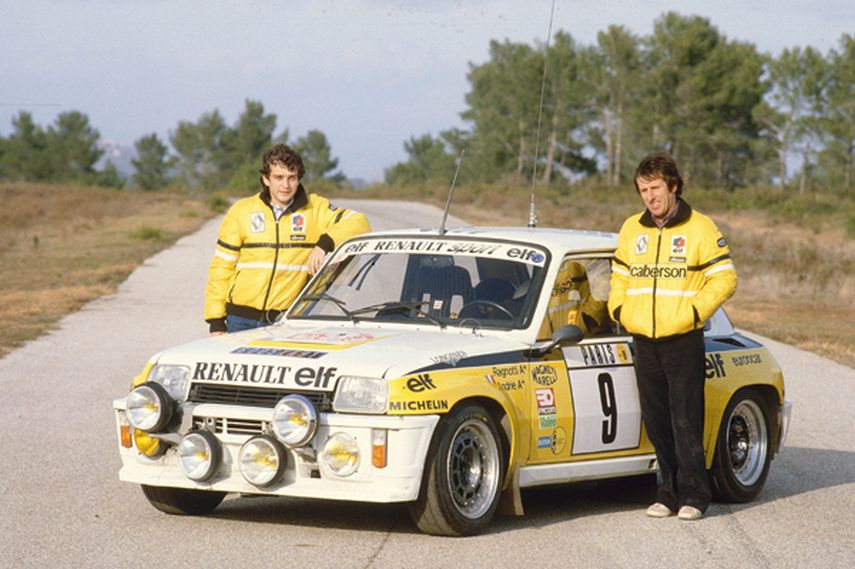
Jean Ragnotti (right) and Jean-Marc Andrie
His last “old world” win was Monte-Carlo in 1981. In 1982, with Audi Quattros already on the scene, he still won the Tour de Corse. Third at Corsica in 1984 was a sensation; winning there again in 1985 in the Maxi Turbo, ahead of Bruno Saby’s Peugeot after a wave of retirements, was bigger still. That same event took the life of Attilio Bettega.
| 1982 | Renault — 5 Turbo · Tour de Corse win |
|---|---|
| 1984 | Renault — 5 Turbo / Maxi · third at Tour de Corse |
| 1985 | Renault — 5 Maxi Turbo · Tour de Corse win |
Ragnotti is the RWD holdout story of Group B: asphalt mastery when the regulations and the horsepower race were already moving the other way.
Michele Mouton
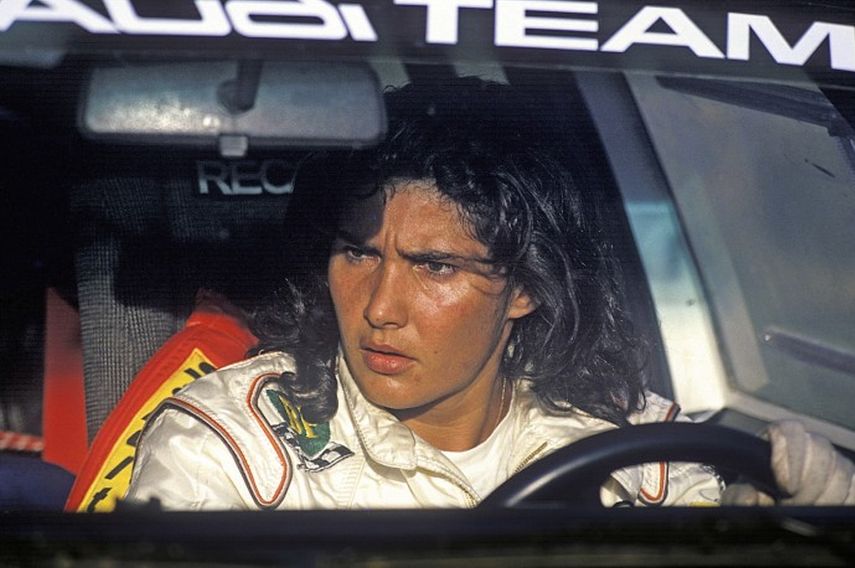
Michele Mouton
Michele Mouton belongs on this list because she was fast enough to fight for a world title in the same era as Röhrl, Mikkola and Blomqvist — not as a footnote, but as a championship contender.
She spent the Group B years with Audi Sport, progressing through the Quattro family as the cars grew shorter, wilder and more powerful. The 1982 season was her peak: after becoming the first woman to win a WRC round at Sanremo in 1981, she won in Portugal, Greece and Brazil and finished runner-up in the drivers’ championship behind Walter Röhrl.
| 1982 | Audi Sport — Audi Quattro · WRC runner-up; wins in Portugal, Acropolis and Brazil |
|---|---|
| 1983 | Audi Sport — Audi Quattro A2 |
| 1984–85 | Audi Sport — Audi Sport Quattro / S1 |
| 1986 | Audi Sport — Sport Quattro S1 (Audi withdrew after Rally Portugal) |
Beyond the WRC, Mouton won the 1985 Pikes Peak International Hill Climb in an Audi Sport Quattro S1 — another reminder that she could extract everything from the most extreme machinery of the period.
After Group B ended she stayed in the sport as a competitor, organiser and later an FIA figure, with a lasting influence on rallying’s public face and safety culture. On this list she stands for what the era demanded: speed, nerve and results against the strongest field rallying had seen.
Henri Toivonen
Henri Toivonen is the most tragic figure of the Group B era. His death on the 1986 Tour de Corse in a Lancia Delta S4 was one of the decisive reasons the category was banned.
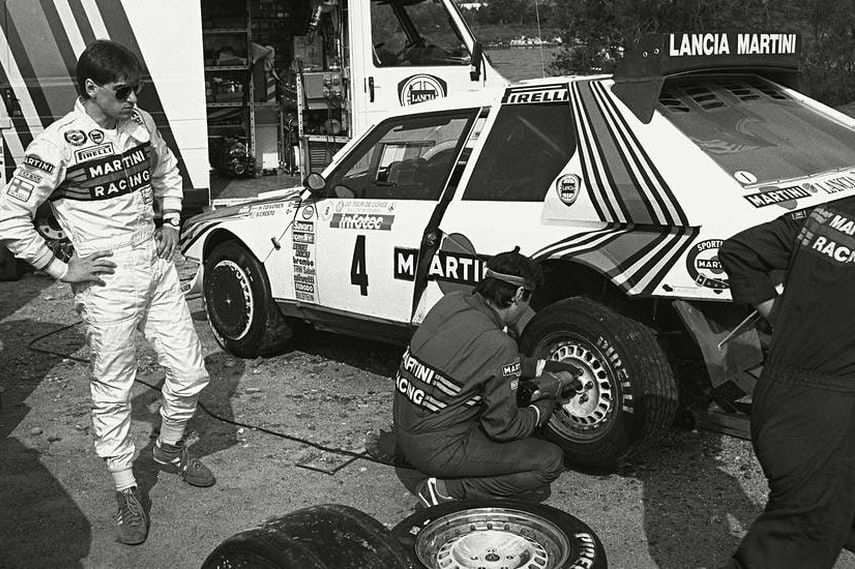
Henri Toivonen and Lancia Delta S4
Before the crash on 2 May 1986 he had taken two WRC wins in the Delta S4: the 1985 Lombard RAC Rally — the car’s debut — and the 1986 Monte-Carlo opener. Two weeks before Corsica he and co-driver Sergio Cresto also won Rally Costa Smeralda in the European Rally Championship. Earlier he had scored WRC podiums in the Lancia 037 at the 1984 1000 Lakes and 1985 Sanremo.
| 1984–85 | Lancia — Rally 037 · podiums at 1000 Lakes and Sanremo |
|---|---|
| 1985–86 | Lancia — Delta S4 · RAC and Monte-Carlo wins · fatal crash at Tour de Corse |
Toivonen’s entry is the cost of Group B written into the record: brilliant early results in the Delta S4, then a loss that helped end the era itself.
Conclusion
The Group B rally drivers left a permanent mark on motorsport. Their ability to control some of the most powerful rally cars ever built pushed driving skill and car performance to a limit the sport could not sustain. The dangers that killed the category also forced safer rules and stronger cars in the years that followed.
The competition raised rallying’s profile worldwide. In the end, these drivers mattered not only for titles and stage times, but for how completely they defined — and closed — an age.
Photos: kaleva.fi, rallylife.cz, roadandtrack.com, motorlegend.com

